
Fill the next slot. On the floor or on Zoom.
Local search and AI Search for established trainers and online coaches. Specialization legible, results surfaced with consent, intro session or strategy call above the fold, and a booking flow that runs through whatever software you already coach in.
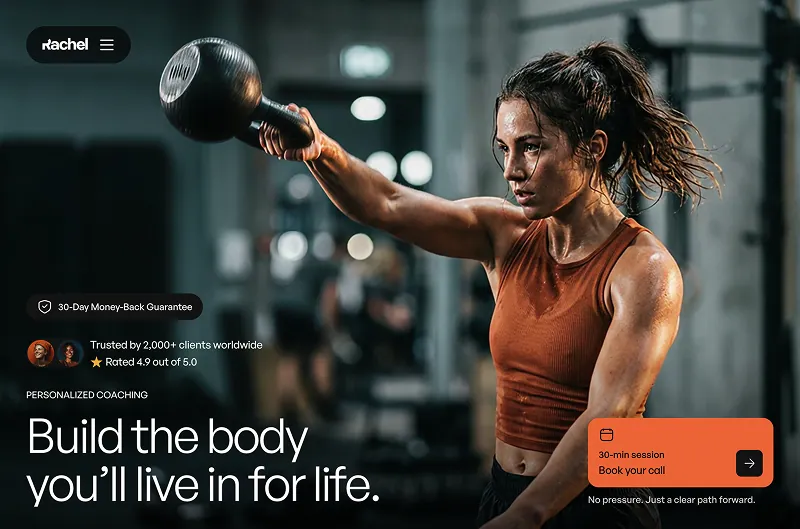 Built to book the call
 A page that could be
anyone’s.
The credibility you actually built, the certs, the roster, the years on the floor, the niche you settled into, is rarely legible above the fold. Three patterns show up on nearly every established trainer we audit.
- / 01
The niche you have by accident, the site refuses to name.
"Personal trainer" is a flat search term. "Postpartum strength coach," "runner’s strength coach," "strength training for women over 40," "online coach for desk-job lifters" are the searches that actually convert. You already have a niche, the client that keeps signing up, the demographic the results belong to. The page that names it beats the page that lists every service.
- / 02
Your Google listing is set up like a storefront.
A trainer without a gym of their own is a service-area business in Google’s eyes, a different setup than a brick-and-mortar. Address hidden, service area defined, reviews carrying more weight. Most established PTs have no listing, one with their home address public, or one Google soft-suspended for setup errors they never knew were errors. The local visibility leaks for years before anyone catches it.
- / 03
In-person, online, hybrid, forced into one lane.
Most established PTs run some mix of all three, and the site makes the visitor pick a lane that does not exist. "In-person training" or "online coaching" framed as two products instead of one practice serving three modalities. The prospect who wanted hybrid leaves because the page never said hybrid was a thing.
How prospects
actually search.
"Personal trainer" is a flat term, the searches that convert name the demographic, the goal, or the modality. They split into the prospect hunting for someone who has done this exact work, and the one still deciding whether to hire at all.
"Someone like me."
Local, online, and demographic searches, and this is where the conversion lives. Lower volume than "personal trainer near me," far higher intent. They do not care where you live so much as whether you have done this work with someone like them. Name the niche and you win them. Say "I work with all populations" and you get nothing.
- personal trainer near me
- online coach for [demographic]
- postpartum strength coach
- strength training for women over 40
- runners strength coach
"Is it worth it?"
Researching before they ever search a name, and AI Search has changed the game here. The pre-hire research is moving from twelve open tabs to "ChatGPT, give me three online coaches for postpartum strength." The tools cite trainers whose sites answered the question and whose reviews name the trainer, the specialty, and the result.
- online vs in-person personal trainer
- how to find a good personal trainer
- is online coaching worth it
- best personal trainer for [demographic]
 Earned proof, not an ad shoot
 The niche is
the headline.
The site has one job: make the prospect feel you have done this exact work with someone like them, then get them on a strategy call or into an intro session before they leave. If your roster is mostly postpartum clients, the site says postpartum. If you coach runners, it says runners. The fix is not more services. It is fewer, and louder.
- Niche specialization legible above the fold, the demographic, the goal, or the modality you actually work in
- Results surfaced with client consent: progress photos, body-comp deltas, lift PRs, quoted outcomes
- Credentials on the bio page (NASM, ACE, NSCA, ISSA, NCSF, specialty certs), without leading the home page with them
- Intro session, strategy call, or first-month offer prominent and one click from any page
- Service modality stated clearly: in-person, online, hybrid, with the cadence each runs at
- Service area or "online everywhere" called out explicitly so a prospect knows what they are buying
- Booking integrated with your platform (Trainerize, TrueCoach, MyPTHub, Everfit, PT Distinction)
- Reviews and case-style proof on the site, named where you have permission, matched on Google
How it works
for coaches.
Three workstreams, tuned to the way trainer prospects search. The technical pieces matter less than the content shape, and almost no trainers have built the AI-Search layer yet, which is exactly why the window is open.
Google Business Profile
Set up as a service-area business, not a storefront. The address is hidden so clients are not showing up at your house, the service area is defined as a radius or a list of cities, and the category is "personal trainer" with secondary categories that match your specialty. Reviews carry more weight because the address signal is absent, so the review-ask becomes a first-90-days priority. If your listing is suspended or set up wrong, we fix it before anything else.
On-site content shape
A page for your primary niche, written in the language the prospect already searches in. A bio page that names the certs (NASM, ACE, NSCA, ISSA, NCSF) and specialty work, pre/postnatal, corrective exercise, nutrition, FMS, PRI, RTS. A results section that surfaces real outcomes with the consent you have on file. If you run a hybrid practice, in-person and online each get a real page so the prospect searching either finds you.
AI Search visibility
Where personal training is moving fastest. The research queries, "best online coach for [demographic]," "how to find a good personal trainer," "online vs in-person," "is hiring a coach worth it," are exactly what ChatGPT and Perplexity get asked. Reviews matter more here than in most niches because the service-area setup makes the review signal load-bearing. We coach the review-ask so reviews name you, the specialty, and the result.
What moves when the page
names the niche.
The three numbers we watch for a trainer: profile interactions, strategy calls booked, and new clients signed. They move in that order.
Profile Interactions
Trial bookings
New Members
Figures are representative of the trajectory we target three months into an engagement, not a guarantee. For online-only coaches the line is slower and compounding; we report the real numbers monthly.
Trainer marketing,
answered.
The questions established trainers and online coaches ask before they sign. If yours isn’t here, the audit will surface it.
- I am online-only with no physical location. Can you still help?
- Yes, and the playbook shifts. Online-only PTs do not have a local search play in the traditional sense, no service-area GBP that fits cleanly, no "trainer near me" map pack to compete in. The work moves to three other places. First, specialization-driven SEO that ranks you for the demographic and goal queries your clients actually search ("online coach for [demographic]," "remote strength program for [goal]"). Second, AI Search visibility through review density, case-style content, and FAQ structure so ChatGPT and Perplexity cite you when a prospect asks for an online coach in your niche. Third, brand-search support through content and lead magnets that pull from the audience you already have. We are honest about the timeline: online-only ranking is a content-and-review compounding play, slower than a local lift, and the work is real.
- How does Google Business Profile work for a trainer without a storefront?
- You are set up as a service-area business, which Google treats differently from a brick-and-mortar gym. The address is hidden so clients are not showing up at your house. The service area is defined as a radius from where you operate or a list of named cities. The category is "personal trainer," and we add secondary categories that match your specialty, strength coach, pre/postnatal trainer, nutrition coach, where applicable. Reviews carry more weight than they would for a storefront because the address signal is absent, so the review-ask becomes a higher priority in the first ninety days. If your existing listing is suspended or set up wrong (home address public, wrong category, wrong service area), we fix it before we do anything else, setup errors that go uncorrected hold the suspension and the local visibility does not return.
- I run in-person, online, and hybrid clients. How do you market all three?
- Each modality gets its own page and its own conversion mechanic, and the home page is honest that the practice runs all three. In-person clients are buying access to you in a room, so the page surfaces the host gym, the schedule windows you keep, and the in-person intro session. Online clients are buying program design, check-ins, and accountability through the app you already use (Trainerize, TrueCoach, MyPTHub, Everfit, PT Distinction), and the page surfaces the cadence, the deliverables, and the platform. Hybrid clients are buying both with a clear rhythm, often two in-person sessions a month plus weekly online programming. The same niche specialization sits on top of all three so the prospect understands what you do regardless of which modality they pick.
- Does the retainer math work for an online coaching brand?
- It tends to work cleanly because the AOV is high. Most online coaching brands we look at run $200 to $600 a month per client, which means two to three new clients per quarter pays the retainer many times over. The acquisition channel is durable in a way paid ads are not, SEO and AI Search authority compounds. The reviews and case-style content you build in month three are still ranking and still being cited in AI answers in month eighteen. For online brands specifically, the content layer is the moat: the brand that built it has a steady inbound channel; the brand that did not is paying CPM-per-client every month.
- How does AI Search change personal trainer marketing?
- More than most established PTs realize. The research a prospect does before they hire is moving from "twelve open tabs of trainer websites" to "ChatGPT, give me three online coaches for postpartum strength" or "who is the best trainer in [area] for runners over 40." The tools cite trainers whose sites answered the question in the shape it was asked and whose reviews name the trainer, the specialty, and the result. A PT with a real niche page, a results section with consent, and review density that names the work gets quoted. A PT with a generic site does not. This is the lever moving fastest in trainer marketing right now, and almost no one has built for it, which is exactly why the window is open.
- How do you handle results photos without it feeling like a 2014 Instagram ad?
- Consent first, context second, no before-and-afters with shock-value framing. The results that work on an established PT site are the ones that name the client (where you have permission), describe what the goal actually was, and show the outcome in a way the prospect reads as real, body-comp deltas where they matter, lift PRs where they matter, race times, postpartum recovery markers, lab work, or the qualitative shift the client cares about most. The visual treatment is calm; the copy carries the weight. A serious prospect can tell the difference between earned proof and an ad shoot in about three seconds, and the calmer site wins.
See what’s costing you
the next client.
Five-minute Loom walkthrough of your site and search presence, emailed back within 24 to 48 hours. No call required.
Get my free audit